
Dr. Arbi Melikian, OD
Co-Founder
Dr. Arbi Melikian is a highly experienced medical optometrist with more than 23 years of clinical experience helping patients achieve clearer vision.
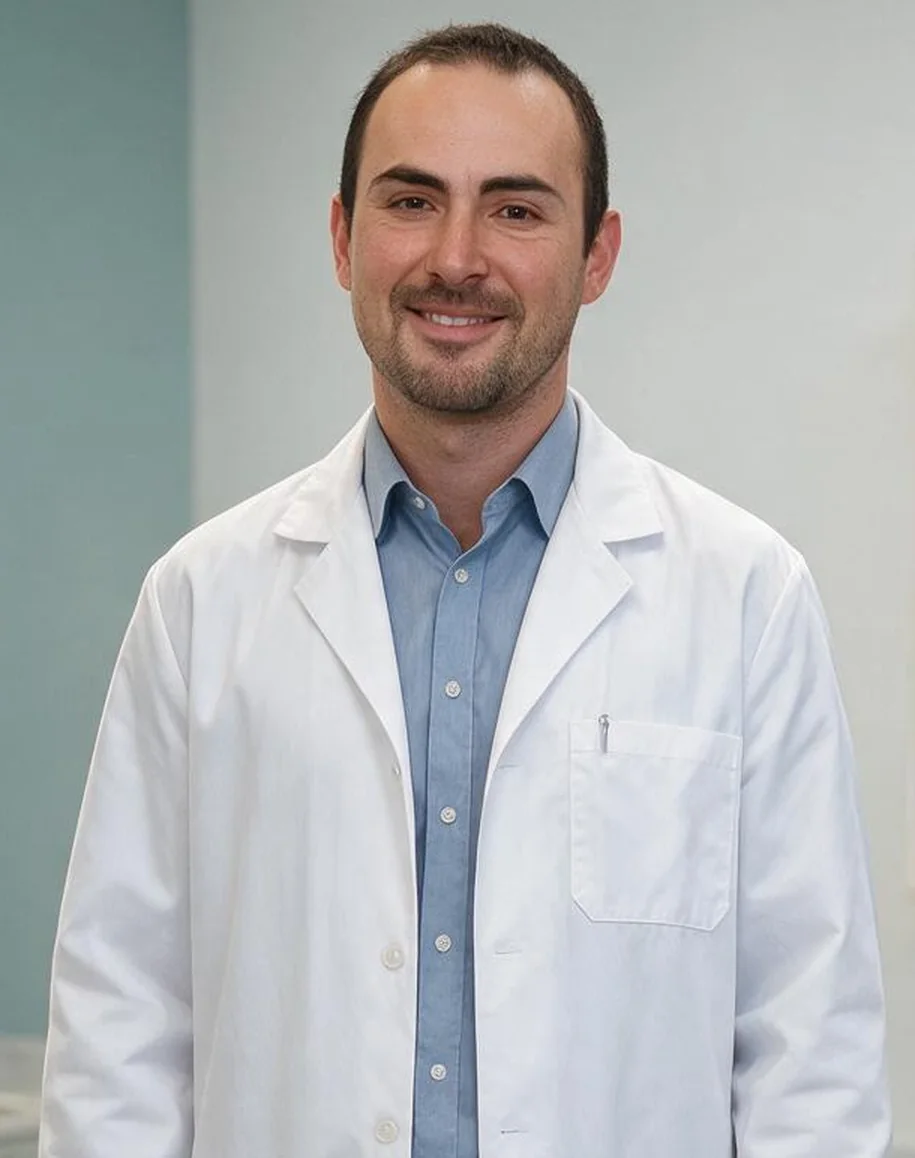
About Dr. Melikian
Dr. Arbi Melikian is a highly experienced medical optometrist with more than 23 years of clinical experience helping patients achieve clearer vision and greater independence from glasses and contact lenses. He is widely respected for his thoughtful, conservative approach to vision correction and for the genuine care he brings to every patient interaction.
As Co-Founder of Global LASIK & Cataract Institute, Dr. Melikian leads diagnostic and co-management care at the Pasadena and Huntington Beach offices. There he performs candidacy testing before surgery and follows patients through the full arc of their recovery, which is where most of the difference between a good result and an excellent one is made.
A Conservative, Patient-First Approach
Dr. Melikian starts from the position that vision correction should be earned by the measurements, not assumed. A prescription that has drifted in the last year, a marginal tear film, or a cornea that is thinner than it first appears will all change the recommendation.
He takes the time to explain what each measurement means and why it matters, so that patients leave a consultation understanding their own eyes rather than simply being told an answer. Where a procedure is not the right choice, he says so and explains what would need to change.
For patients who do proceed, he manages the recovery closely, reviewing healing, comfort and visual quality at each stage, and treating the ocular surface actively so that the result settles as well as it possibly can.
 Model
 Model
Education & Training
Dr. Melikian graduated with honors from the University of California, Santa Barbara, and earned his Doctor of Optometry degree with honors from the Illinois College of Optometry in Chicago. His clinical education included extensive, multi-state internships in Arizona, Illinois, Florida and Ohio, where he trained in high-volume settings with leaders in LASIK, refractive surgery, cornea, retina and ocular pathology.
Early in his career he served as Medical Director of a LASIK center in Tucson, Arizona, overseeing patient care, clinical protocols and physician performance in a busy refractive surgery environment. In 2008 he returned to California to be closer to family and joined Global LASIK & Cataract Institute, where he has practiced continuously since.
His clinical focus is refractive candidacy and the medical management of the ocular surface: corneal topography and tomography, wavefront analysis, tear film assessment, and the dry eye work that so often determines whether a patient is ready for surgery.
He co-manages laser vision correction and cataract patients, working alongside the surgical team from the first measurement through to the final post-operative visit.
Dr. Melikian also fits specialty contact lenses for irregular corneas, including scleral lenses for patients with keratoconus or post-surgical astigmatism.
He is committed to physician education and has personally trained and mentored over 100 physicians in LASIK care, patient counseling and clinical decision-making; colleagues frequently seek his input on complex or borderline cases. He is licensed by the California Board of Optometry, completes over 50 hours of continuing education every two years, and is an active member of the American Optometric Association.
- Optometry school
- Illinois College of Optometry, 2003
- In practice
- 23+ years
- Languages
- English, Armenian, Persian (Farsi), German (conversational)
Procedures & Conditions Treated
Dr. Melikian evaluates and manages a broad range of refractive and medical eye conditions, and works closely with the surgical team on every candidacy decision. His areas of expertise include:
- Refractive surgery candidacy evaluation
- Corneal topography and tomography
- Pre- and post-operative LASIK care
- Cataract co-management
- Dry eye disease and ocular surface care
- Keratoconus monitoring
- Specialty and scleral contact lens fitting
- Comprehensive eye examinations
- Diabetic and hypertensive eye care
- Glaucoma screening and monitoring
- Ocular allergy management
Because he sees patients both before and long after surgery, Dr. Melikian brings an unusually complete view of how a treatment actually performs over time. That perspective informs every recommendation he makes, and it is why he is as willing to advise against a procedure as he is to recommend one.
Professional Memberships
- American Optometric Association
Locations & Scheduling
 Pasadena
1055 East Colorado BlvdSuite 102Pasadena, CA 91106
- Wed–Thu: 10am–6pm
- Sat: 9am–2pm
 Huntington Beach
18632 Beach BlvdSuite 100Huntington Beach, CA 92648
- Tue: 9am–5pm
- Wed–Thu: 10am–5pm
- Fri: 9am–6pm
- Sat: 9am–3pm
 Model
Caring for Patients Across Southern California
Dr. Melikian sees patients at the Global LASIK & Cataract Institute offices in Pasadena and Huntington Beach.
Patients come to him for refractive consultations, specialty contact lens fittings, dry eye treatment, and the ongoing medical eye care that keeps a good surgical result stable for years afterward.
He speaks Armenian and Farsi fluently and has conversational German, which lets him serve a diverse patient population in their own language.
His goal is straightforward: give every patient an honest, thorough assessment, and then the follow-through to match it. Outside the clinic he is a proud father to a daughter pursuing a career in medicine.
 Model
Frequently Asked Questions
At the Pasadena and Huntington Beach offices, it means Dr. Melikian follows you from the first measurement to the last follow-up, while Dr. Youssefzadeh concentrates on the procedure itself. Dr. Melikian performs your candidacy testing, prepares your ocular surface beforehand, and sees you at your post-operative visits.
Nothing is assumed: the doctor who reviewed your baseline measurements compares them to how you are healing.
An unstable tear film distorts the measurements the laser treatment is planned from, and it makes the recovery less comfortable. Treating it first improves both the accuracy of the plan and how the first few weeks feel.
Not yet, and that is a good thing. A prescription needs to be stable for about twelve months before a permanent correction makes sense. Dr. Melikian will document where you are now and recheck at intervals so you can proceed at the right time.
Keratoconus rules out standard LASIK, but it does not rule out good vision. Depending on how the cornea is behaving, options include scleral or hybrid contact lenses, corneal cross-linking to halt progression, and in selected cases intrastromal corneal ring segments.
Typically one the day after surgery, then at one week, one month, and three months. Additional visits are added whenever healing, comfort or visual quality suggests they would be useful rather than on a fixed schedule.