
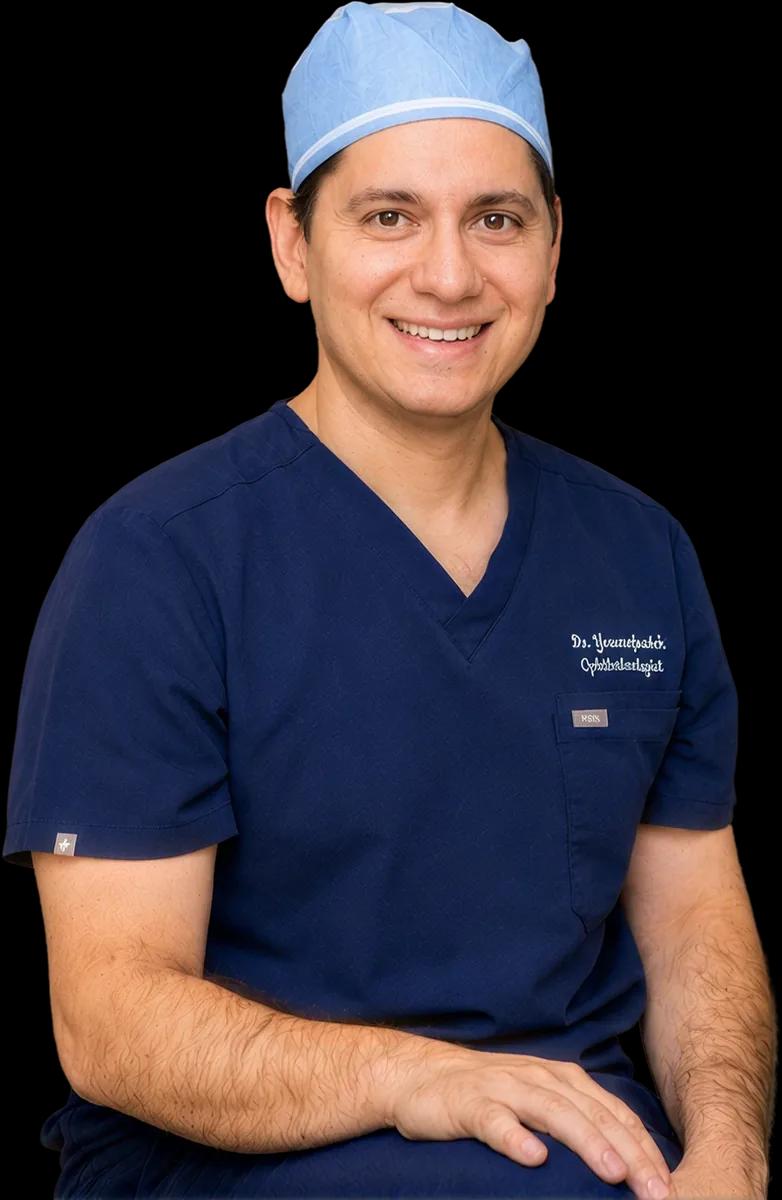
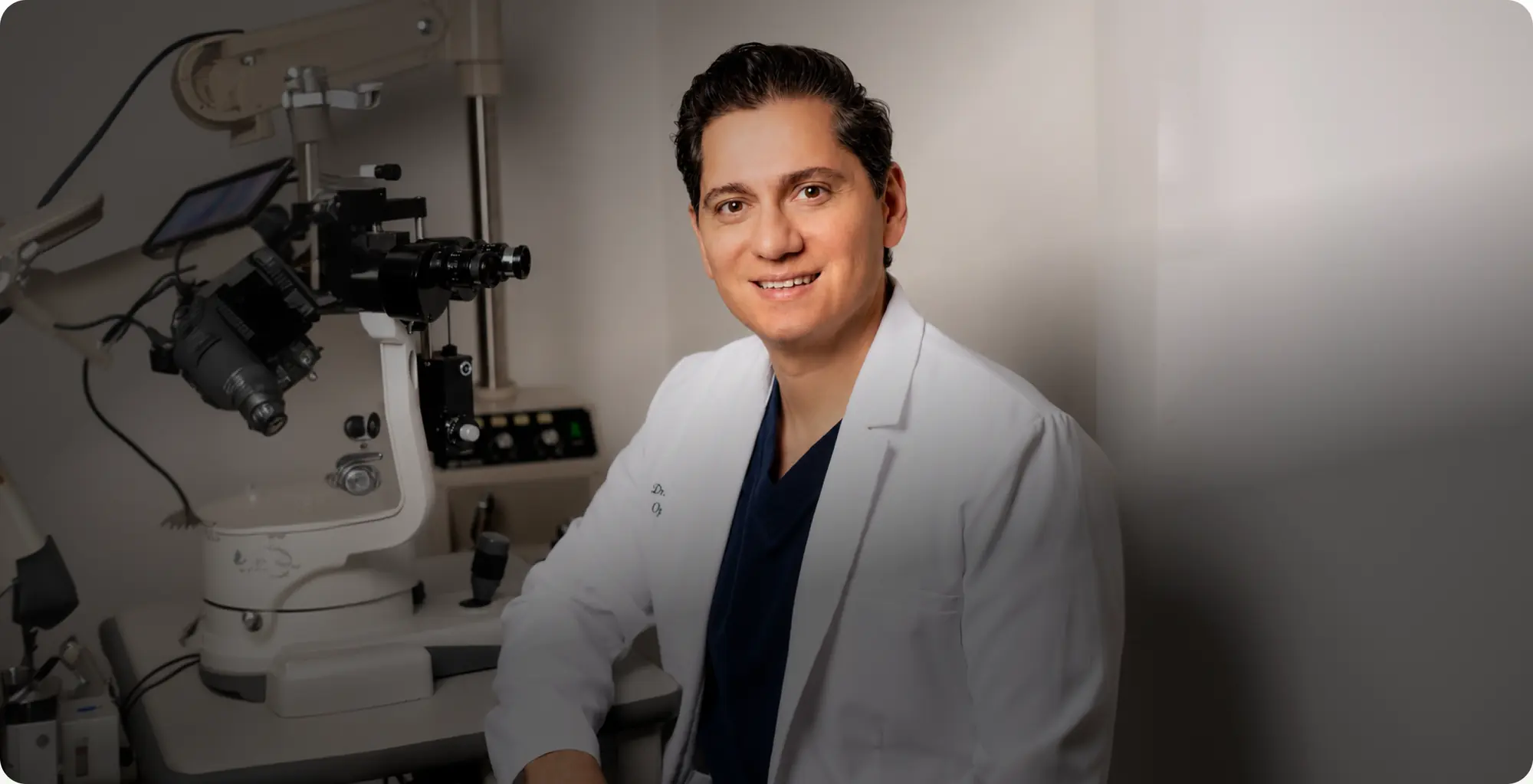
Dr. Bavand Youssefzadeh, DO
Co-Founder | Fellowship-Trained Cornea, Refractive & Cataract Surgeon

About Dr. Youssefzadeh
Dr. Bavand Youssefzadeh is a fellowship-trained ophthalmologist and surgeon specializing in refractive surgery, corneal disease, cataract surgery, and comprehensive eye care. As Co-Founder of Global LASIK & Cataract Institute, he provides advanced, individualized care for patients seeking laser vision correction, modern cataract surgery, corneal treatment, and comprehensive management of complex eye conditions.
With extensive experience in refractive and anterior segment care, Dr. Youssefzadeh has been involved in more than 50,000 refractive procedures over the course of his career. His approach combines advanced diagnostic technology, careful patient selection, individualized surgical planning, and a commitment to achieving the best possible long-term visual outcome for each patient.
A Personalized, Precision-Driven Approach
Dr. Youssefzadeh believes that exceptional outcomes begin with an accurate diagnosis and thoughtful patient selection. Not every patient is best served by the same procedure, and in some cases, surgery may not be the right recommendation.
Before recommending LASIK, PRK, cataract surgery, refractive lens exchange, or another treatment, he carefully evaluates each patient's unique ocular characteristics and long-term visual needs. This individualized approach is designed to help patients understand not only what treatments are available, but which option is most appropriate for their eyes.
Known for his detailed consultations and individualized surgical planning, Dr. Youssefzadeh places a strong emphasis on patient education, clear communication, and continuity of care before and after treatment.
 Model
 Model
Education & Training
Dr. Youssefzadeh earned his Bachelor of Science in Biochemistry from Baylor University before receiving his medical degree from the College of Osteopathic Medicine of the Pacific in Pomona, California.
During medical school, he distinguished himself through academic achievement and leadership. He served as Class President throughout all four years of medical school, graduated with honors, and was inducted into Sigma Sigma Phi, the national osteopathic medical honor society.
He subsequently completed his ophthalmology residency through Nova Southeastern University and Larkin Community Hospital in South Florida, where he served as Chief Resident.
Dr. Youssefzadeh also completed the Lancaster Course in Ophthalmology, an intensive program in the basic and clinical sciences of ophthalmology taught by distinguished faculty and educators from leading academic institutions.
- Medical school
- College of Osteopathic Medicine of the Pacific
- Residency
- Ophthalmology Residency, NOVA Southeastern University / Larkin Community Hospital, South Florida, Chief Resident
- Fellowship
- Cornea, External Disease & Refractive Surgery, Gordon Schanzlin New Vision Institute, San Diego, California
- Languages
- English, Spanish, Persian (Farsi)
Advanced Fellowship Training in Cornea and Refractive Surgery
There, he trained under internationally recognized leaders in the field, including Michael Gordon, M.D., a pioneer in refractive surgery, and David Schanzlin, M.D., a renowned corneal and refractive surgeon, educator, and academic leader.
This advanced fellowship training provided extensive experience in laser vision correction, corneal disease, refractive surgery, complex anterior segment care, and the evaluation and management of patients with challenging visual conditions. It continues to shape Dr. Youssefzadeh's meticulous approach to diagnosis, candidacy assessment, surgical planning, and long-term patient care.
Board Certifications
- Board Certified in OphthalmologyAmerican Osteopathic Board of Ophthalmology & Otolaryngology
Procedures & Conditions Treated
Dr. Youssefzadeh provides comprehensive evaluation and treatment across a broad range of refractive, corneal, cataract, and general ophthalmic conditions. His areas of expertise include:
- LASIK and PRK laser vision correction
- Cataract surgery
- Advanced-technology and premium intraocular lenses
- Refractive lens exchange
- Corneal disease and corneal surgery
- Corneal transplant surgery
- Keratoconus evaluation and management
- Pterygium treatment and surgery
- Dry eye disease
- Glaucoma evaluation and management
- Diabetic and retinal eye exams, with referral to retina specialists
- Comprehensive ophthalmology
His broad clinical background allows him to evaluate patients from both a refractive and comprehensive ophthalmic perspective. Rather than approaching every patient with a predetermined procedure, Dr. Youssefzadeh considers the full range of available options and recommends treatment based on the individual patient's ocular anatomy, corneal health, age, prescription, lifestyle, visual demands, and long-term goals.
Publications & Research
Dr. Youssefzadeh has contributed academically to the field of ophthalmology, including work related to intrastromal corneal ring segments, a specialized area of corneal and refractive surgery. His academic work reflects a longstanding interest in corneal biomechanics, refractive procedures, and evolving approaches to the treatment of complex corneal conditions.
Professional Memberships
- American Academy of Ophthalmology
- American Medical Association
- Cornea Society
- American Osteopathic Colleges of Ophthalmology and Otolaryngology
Locations & Scheduling
 Pasadena
1055 East Colorado BlvdSuite 102Pasadena, CA 91106
- Wed–Thu: 10am–6pm
- Sat: 9am–2pm
 Huntington Beach
18632 Beach BlvdSuite 100Huntington Beach, CA 92648
- Tue: 9am–5pm
- Wed–Thu: 10am–5pm
- Fri: 9am–6pm
- Sat: 9am–3pm
 Woodland Hills
6325 Topanga Canyon BlvdSuite 430Woodland Hills, CA 91367
- Mon–Fri: 9am–5pm
 Beverly Hills
9001 Wilshire BlvdSuite 306Beverly Hills, CA 90211
- Wed: 9am–5pm
 Model
Serving Patients Throughout Los Angeles and Southern California
At Global LASIK & Cataract Institute, Dr. Youssefzadeh provides advanced ophthalmic care for patients throughout Los Angeles and Southern California, including Beverly Hills, Woodland Hills, Pasadena, Huntington Beach, Agoura Hills, and surrounding communities.
Patients seek his expertise for LASIK and laser vision correction, advanced cataract surgery, premium lens implants, refractive lens exchange, corneal disease, and comprehensive eye care.
Dr. Youssefzadeh's goal is to combine advanced technology, specialized fellowship training, extensive clinical experience, and highly personalized care to help each patient pursue the best possible vision for their unique eyes, lifestyle, and future.
 Model
Frequently Asked Questions
Your first visit is a full diagnostic workup rather than a sales appointment. We map the cornea, measure its thickness, check pupil size in low light, assess the tear film, and dilate to examine the lens and retina. Those measurements decide which procedures are genuinely on the table for your eyes.
Dr. Youssefzadeh then reviews the findings with you himself, explains the trade-offs of each option, and tells you plainly if he thinks you should wait or choose a different treatment.
Corneal thickness, prescription strength and lifestyle drive the decision. LASIK suits most patients with adequate corneal tissue. PRK is often the better choice for thinner corneas or for people in contact sports. EVO ICL preserves corneal tissue entirely, which makes it a strong option for higher prescriptions.
It means complex corneas get specialist attention. Keratoconus, previous refractive surgery, corneal scarring and irregular astigmatism all narrow the safe options, and fellowship training in cornea prepares a surgeon to evaluate those cases and identify which options remain.
Most LASIK patients see clearly enough to drive the next morning and return to desk work within a day or two. PRK takes longer: useful vision usually returns over three to five days, with sharpness continuing to improve for several weeks.
You will typically be seen the next day, then at one week, one month and three months, so healing is tracked rather than assumed.
Yes. A previous evaluation is a useful starting point, and a second look can sometimes find an option that suits your eyes, such as a surface or lens-based procedure. Bring your previous measurements to the consultation and we will re-evaluate them against the full range of corneal and lens-based options.