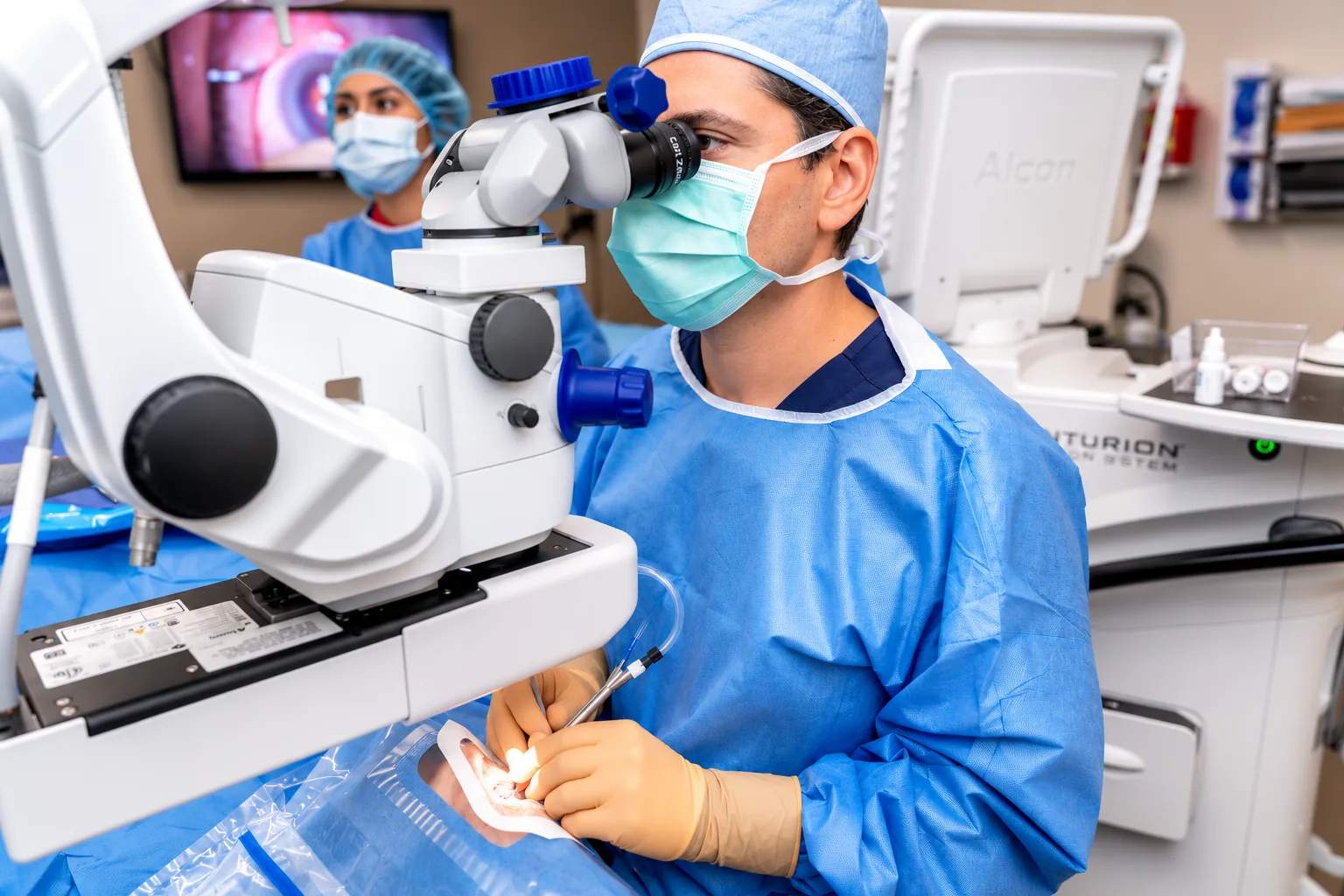
The pathway
At a routine exam your optometrist finds a cataract and, when it is limiting your vision, refers you with their findings. Our evaluation measures the eye for the implant, examines the whole eye, and discusses lens options with you; the surgeon operates and typically sees you the next day and at one week. The one-month visit and the final refraction for glasses can be with your optometrist, who checks the eye's healing, the lens position and pressure, and reports to us. The second eye follows the same path.
What your optometrist checks after surgery
- Vision and the healing of the incision and cornea
- Inflammation inside the eye and the tapering of drops
- Eye pressure
- The position and clarity of the implant and the capsule behind it
- The macula and retina, where symptoms or risk warrant
- The final refraction once the eye is stable, and a new glasses prescription
Persistent inflammation, raised pressure, a drop in vision or any concern is referred back to the surgeon promptly. Posterior capsule haze developing months or years later is treated with a quick laser, which we arrange.
Premium lenses and co-management
Patients who choose toric, multifocal, extended depth of focus or Light Adjustable lenses follow the same pathway, with the surgeon handling the lens-specific steps: toric alignment checks and, if you have a Light Adjustable Lens, its adjustment visits, which are with the surgical practice. Your optometrist is kept informed of the lens chosen and the visual expectations so their follow-up and any glasses are matched to it.
For optometrists
We work with your optometrist on the plan, including lens-specific guidance and reports after visits. Patients return to you for ongoing care. We are glad to discuss individual patients before referral.
Is this right for your eyes?
Nothing on this page is a diagnosis. Whether this is the right choice for you is decided by a full examination at one of our 4 offices: Pasadena, Huntington Beach, Woodland Hills and Beverly Hills.
About this content: This page was written with the assistance of AI tools and reviewed for medical accuracy by Dr. Arbi Melikian, OD. It is general information, not medical advice, and does not replace an eye examination. Individual results vary. Read our medical disclaimer.