
Pterygium (Carnosidad) Treatment & Surgery
 Model
Why Pterygium Treatment Matters
A pterygium is the eye’s response to decades of sun, wind and dust: a wedge of tissue that creeps in from the white of the eye toward the cornea. Small ones are managed. Growing ones are removed, and the technique used to remove them decides whether they come back. At Global LASIK and Cataract, Dr. Bavand Youssefzadeh and our clinical team use conjunctival autograft repair where appropriate, a technique associated with low recurrence.
For a while a pterygium is only a cosmetic and comfort issue: redness, grittiness, an eye that always looks irritated. Then it reaches the cornea, drags the surface out of shape, and induces astigmatism no prescription quite corrects.
Southern California is a high-risk environment for exactly this: sun, wind and time outdoors. Removing a pterygium before it crosses onto the visual axis is far simpler than repairing the scarring it leaves once it has.
 Model
What Is Pterygium Surgery?
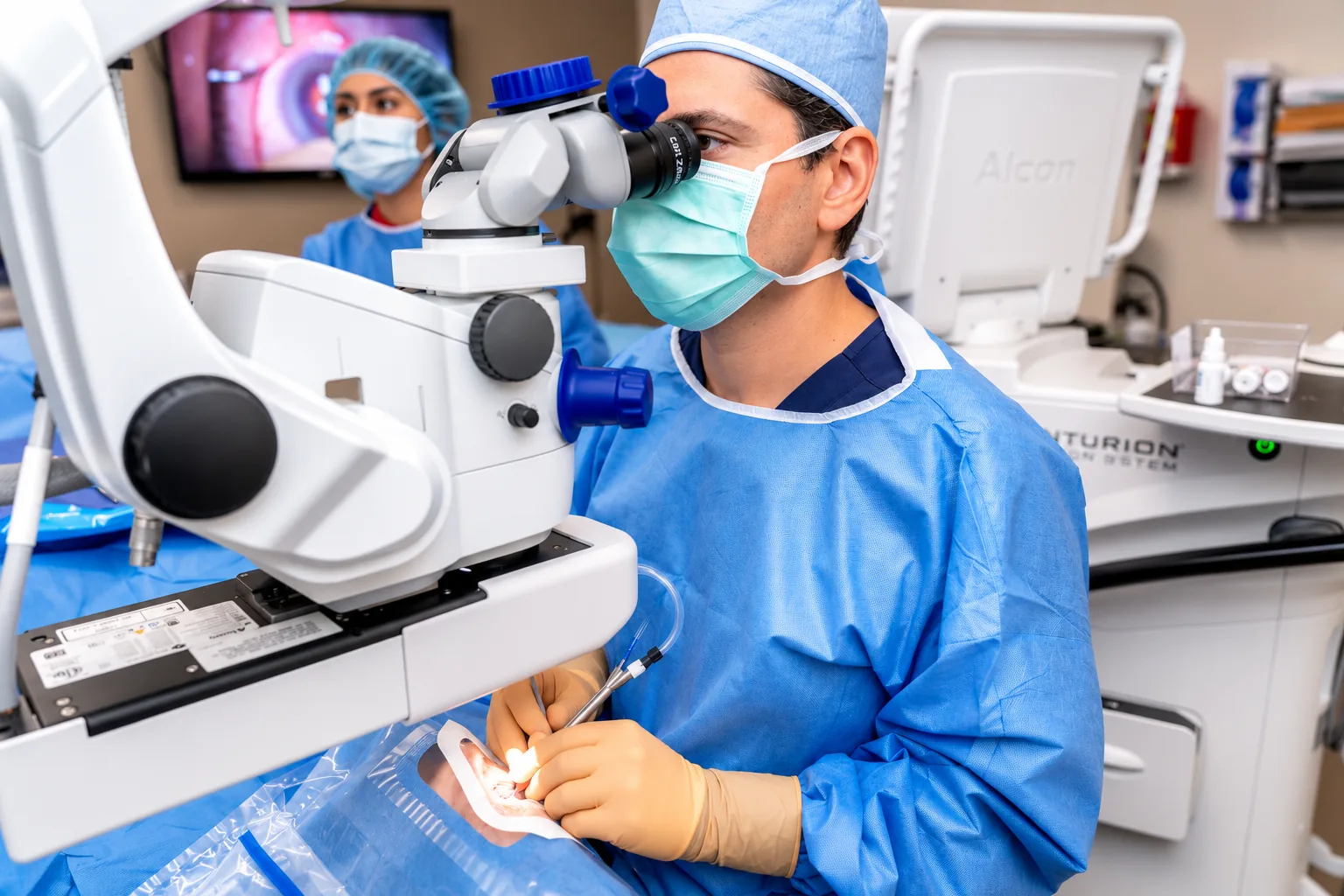
A pterygium is a fleshy, triangular tissue growth that starts on the white of the eye and can slowly creep onto the clear cornea. Surgery removes the growth and then covers the bare area with a small graft of your own healthy conjunctiva, secured with tissue adhesive or fine sutures, depending on your surgeon’s approach.
The procedure takes about 30 minutes under local anesthetic. The graft is what keeps the recurrence rate low; removal alone allows the growth to return in a substantial share of cases.
How Pterygium Surgery Works
Why Patients Choose Pterygium Surgery
- Ends the chronic redness, grittiness and irritation
- Prevents the growth from reaching the visual axis
- Graft techniques are associated with low recurrence
- Tissue adhesive, where used, can mean less post-operative discomfort
- Removes the induced astigmatism that blurred your prescription
- Outpatient procedure under local anesthetic

 Model
Candidacy and what to expect
You may be an excellent candidate for pterygium surgery if you:
- Have a growth that is visibly advancing toward the cornea
- Experience persistent redness, burning or a foreign-body sensation
- Have noticed new or worsening astigmatism in that eye
- Are bothered by the appearance of the eye
A stable, small pterygium may only need lubrication and sun protection. We will tell you plainly which category yours is in.
The eye is numbed and you are lightly sedated. The removal and graft take around thirty minutes, and you go home the same day with a patch or shield.
The first three to four days are genuinely uncomfortable: a strong foreign-body sensation as the graft settles. Drops and oral analgesia manage it well.
The eye stays red for several weeks as the graft integrates. That redness is expected and fades gradually over one to three months.
Most patients return to desk work within a week and to outdoor activity at two to three weeks, with sunglasses.
Steroid drops are tapered over one to two months, which is a key part of keeping recurrence low.
Ultraviolet protection afterward is not optional: sunglasses and a hat are the best insurance against a second pterygium.
Your surgeon uses graft techniques where appropriate rather than bare-sclera removal.
Dr. Youssefzadeh and our clinical team manage both the surgery and the astigmatism it leaves behind, including later laser correction where appropriate.
Care is available in English, Spanish, Armenian, Farsi and Vietnamese, at four offices across Los Angeles and Orange County.
What patients say about us
Further reading

Affordable Financing Options
Pterygium surgery is often covered by medical plans when the growth threatens vision or causes persistent symptoms; our team confirms your coverage. Where a balance remains, flexible monthly payment plans keep the timing up to your eye rather than your budget.
0% interest financing up to 18 months on LASIK and up to 24 months on cataract surgery and lens replacement, subject to credit approval.
Take the Next Step
A pterygium removed before it reaches the visual axis is a straightforward procedure with an excellent outcome.
Meet with Dr. Youssefzadeh and our clinical team for measurement, photography, and a clear recommendation on whether to treat or monitor.
 Model
Frequently Asked Questions
Long term exposure to ultraviolet light, wind and dust. Pterygium, sometimes called carnosidad or surfer's eye, is most common in people who have spent years outdoors in sunny climates. Sunglasses with UV protection are the best prevention and also slow an existing one.
Not always. A small pterygium that is not growing and does not bother you can simply be watched. Surgery is recommended when it is growing toward the center of the cornea, distorting vision by inducing astigmatism, or causing persistent redness and irritation.
Older techniques that simply removed the tissue had high recurrence rates. Modern surgery removes the pterygium and covers the area with a graft of the eye's own healthy tissue, which brings recurrence down to a low single digit percentage in most published series. Sun protection afterward helps keep it that way.
The surgery is done with local anesthetic and takes about 30 to 45 minutes. The eye is usually sore, red and watery for the first week while the graft settles, and drops keep that comfortable. Most patients are back to work within a week.
Lubricating drops and short courses of anti-inflammatory drops relieve the redness and irritation, and UV protection slows growth. Nothing short of surgery removes the tissue itself.
A pterygium does not shrink on its own, so an early evaluation leaves more options open. Caught early, removal tends to be simpler, the chance of scarring or distortion is lower, and surgery can be planned less aggressively. Left to grow, it becomes larger, harder to remove and more likely to come back.
Pterygium FAQs
Get quick answers to the most common questions about pterygium, why it forms, when to remove it, how recovery feels, and how recurrence is prevented.
This page is general information, not medical advice. Whether a procedure is right for you is decided at an eye examination, and individual results vary. Read our medical disclaimer.